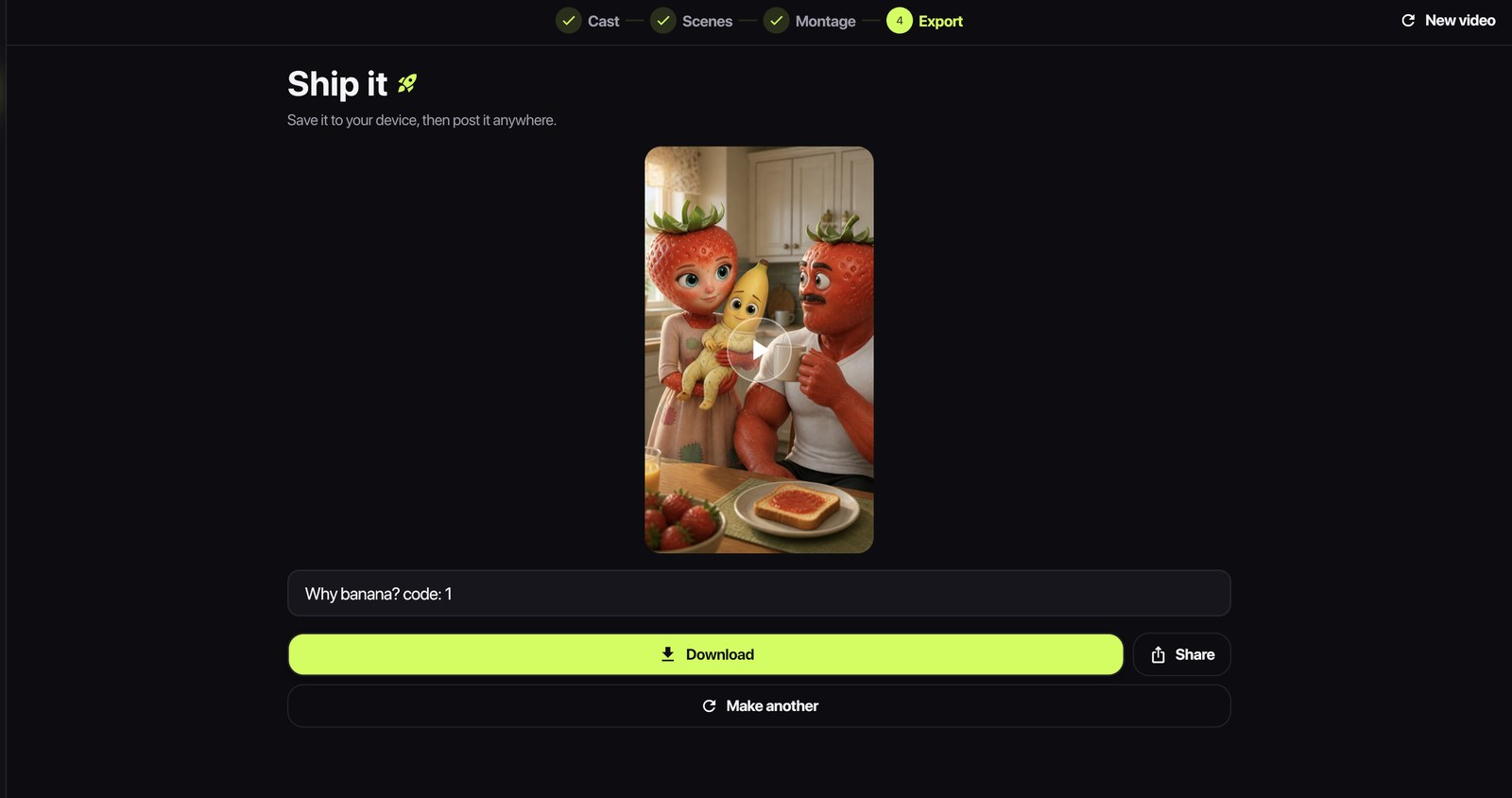
9:16, 1:1 or 16:9: choosing the frame before you render
Aspect ratio is not a delivery setting you flip at the end. It is a composition decision, and in AI video the model needs to know it before it draws anything.
In traditional editing, aspect ratio is a late decision - shoot wide, crop later, lose some edges. In AI video it is an early one, because the frame is not cropped from a bigger image. It is what the model composed for. A shot generated as 16:9 and cropped to 9:16 loses the two characters standing at the sides of it, and no amount of repositioning gets them back.
So the frame is picked when the project starts, and it is worth thirty seconds of thought.
9:16 - the default, and usually correct
Vertical is where short video lives: TikTok, Reels, Shorts, and every in-app feed that autoplays. It is also the friendliest frame for the kind of video generators are good at - one or two characters, close, faces large enough to read.
Compose for it deliberately: characters near the vertical centre, action stacked rather than spread, and nothing important in the bottom sixth of the frame, which is where captions and platform UI both live.
1:1 - the compromise frame
Square is the frame that survives being posted anywhere. It reads acceptably in a vertical feed and acceptably in a timeline, which makes it the pragmatic choice for a video going to several platforms at once - an ad cut, a product clip, anything you do not want to render twice.
It is also the easiest frame for two-character dialogue, because two faces fit side by side without either being pushed to an edge.
16:9 - when the video is going to a page, not a feed
Widescreen is for YouTube proper, embeds on a website, presentations, and anything that will be watched on a laptop rather than a phone. It gives you room for an establishing shot that actually establishes something - a landscape, a room, a group.
The trade-off is that faces get smaller, and small faces are where generated video looks weakest. If a 16:9 video is mostly dialogue, keep the camera closer than the frame invites you to.
A short decision list
- Posting to a phone feed? 9:16.
- Posting to several places and rendering once? 1:1.
- Embedding on a page, or the shot needs width? 16:9.
- Not sure? 9:16. It is the frame most short video is watched in, and it is the frame this kind of generation handles best.
The frame changes how you write, not just how you crop
This is the part that gets missed. A vertical frame wants one subject and a close camera, so scenes tend to be shorter and shots tighter. A wide frame wants space, so a scene can hold two people and a room. Write for the frame you picked: "two avocados face off on a marble counter" is a wide shot in 16:9 and a very tight one in 9:16, and the second version needs the counter dropped from the description.